How to Document Workplace Harassment or Discrimination (And Why It Matters)
Contemporaneous documentation is often the single most important factor in whether a California harassment or discrimination claim succeeds or fails. Start a written record immediately, preserve all electronic communications, report through official channels in writing, and consult an employment attorney before critical deadlines pass.
Start a Contemporaneous Written Record Immediately
The most valuable form of evidence in any harassment or discrimination case is a contemporaneous written record — notes made at or near the time of each incident, recording what was said or done, by whom, when, where, and who witnessed it. A dated journal entry, a note saved in a personal email account, or a message sent to a trusted friend describing the incident on the day it occurred can all serve as powerful corroborating evidence.
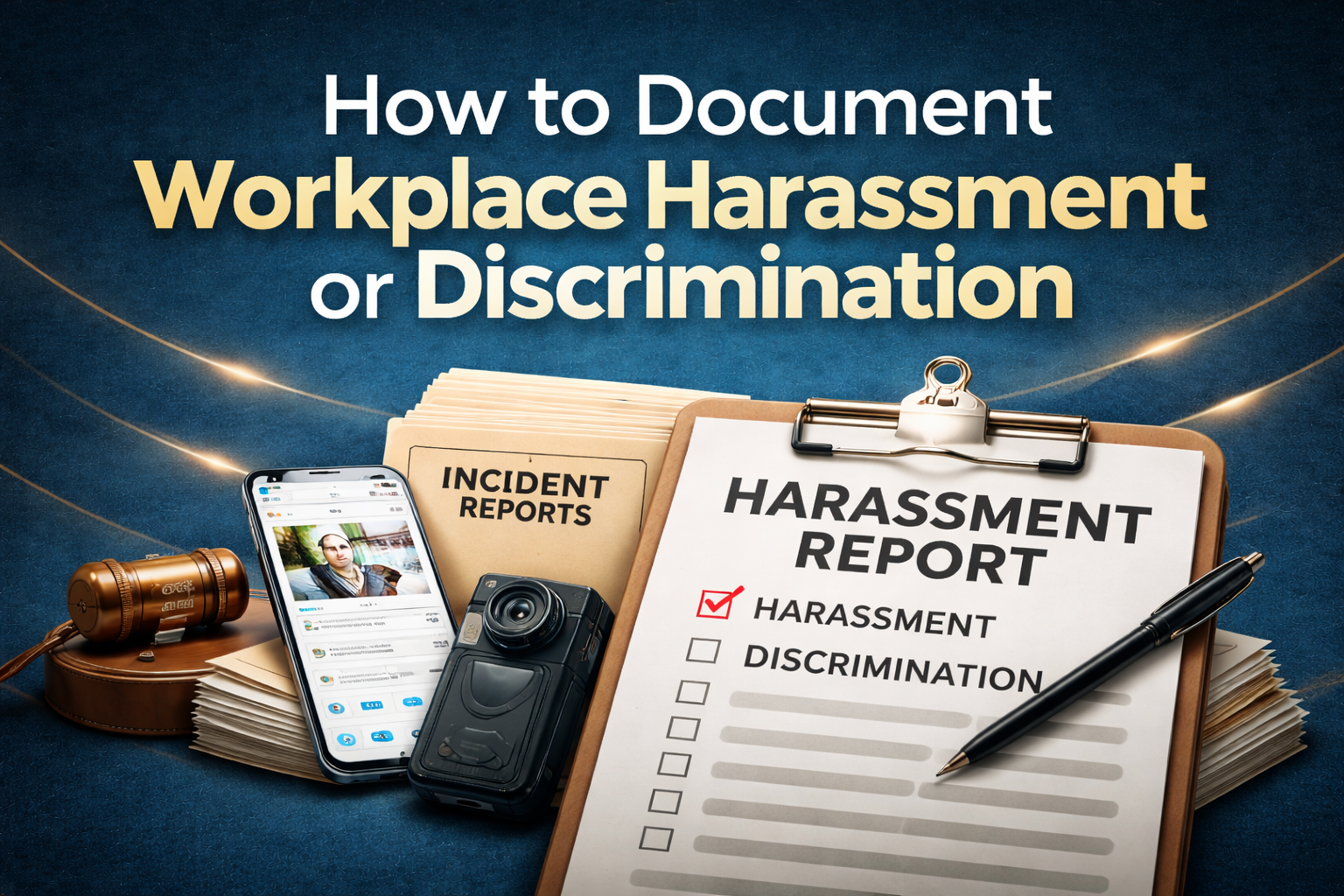
For each incident, record: the date, time, and location; the exact words used or the specific conduct that occurred; the name of the person responsible; the names of any witnesses present; and any immediate response by the employee.
Example: An employee at a Los Gatos company is harassed by her supervisor over a period of months. She never writes anything down. When she finally consults an attorney, she cannot recall the exact dates, the specific words used, or the names of coworkers who were present. Her supervisor's attorney produces glowing performance reviews and no record of any complaint. The case is significantly weakened by the absence of contemporaneous documentation that could have been easily created at the time.
Preserve All Electronic Communications
Harassment and discrimination frequently leave a documentary trail. Text messages, emails, Slack messages, and other electronic communications are among the most valuable categories of evidence in employment litigation. Preserve those communications immediately — before they are deleted or the device is reset. Screenshots saved to a personal device or personal email account provide an independent copy that the employee controls after termination.
California employees should be aware that recording conversations with a supervisor or coworker without the other party's consent may violate Penal Code section 632, which requires the consent of all parties to a confidential communication. Consult an employment attorney before recording any workplace conversation.
Report Through Official Channels — In Writing
Reporting harassment or discrimination to HR or a supervisor serves two functions: it puts the employer on notice of the conduct (which is legally significant for the employer's liability exposure), and the report itself creates a documented record of when the employee complained and to whom.
Make harassment complaints in writing whenever possible — by email rather than in person, or by following up an in-person conversation with a written summary. The complaint should describe the conduct with specificity, identify dates and witnesses, and state clearly that the employee is reporting it as harassment or discrimination. Retain a copy in a location outside the employer's control.
If the employer fails to respond, responds inadequately, or retaliates following the complaint, those facts are themselves legally significant and should be documented in the same manner.
Identify and Preserve Witness Information
Witnesses who observed the conduct or are aware of a pattern of behavior by the same individual can provide corroborating testimony. Identify coworkers who witnessed the conduct and preserve their contact information outside of workplace systems — employee directories are often inaccessible after termination or during a dispute.
Obtain and Review Your Personnel File
California Labor Code section 1198.5 entitles employees and former employees to inspect and receive a copy of their personnel records — including performance evaluations, disciplinary notices, and documents relating to any adverse employment action — within 30 days of a written request. Request your personnel file early, before any adverse action is taken. It frequently contains information directly relevant to a harassment or discrimination claim: a history of prior complaints about the same individual, performance reviews that contradict the employer's stated basis for an adverse action, or documentation of the employee's positive standing prior to the complaint.
Frequently Asked Questions
Begin immediately by creating a written record of each incident, noting the date, time, location, exact conduct or words used, the name of the person responsible, and any witnesses. Preserve all electronic communications, make any internal complaints in writing, and retain copies outside your employer's systems. Consult an employment attorney as early as possible.
Contemporaneous documentation provides objective, time-stamped evidence that the harassment occurred, corroborates the employee's testimony, and establishes the employer's notice of the conduct. Courts give significantly more weight to records created at the time of events than to testimony reconstructed from memory months or years later.
Generally, no — California Penal Code section 632 prohibits recording a confidential conversation without the consent of all parties, and doing so can expose you to criminal and civil liability. Consult an employment attorney before recording any workplace conversation.
Document the report in writing immediately — including the date, time, and names of individuals you spoke with — and follow up with an email summary. Monitor your treatment following the report, document any changes in how you are treated, and if you experience retaliation, consult an employment attorney immediately.
Under FEHA, you must file a complaint with the Civil Rights Department within three years of the harassing or discriminatory act, then file suit within one year of receiving a right-to-sue notice. These deadlines are strict. Consulting an employment attorney early preserves all available options.
If you are experiencing workplace harassment or discrimination, McLellan Law Group, LLP offers a complimentary initial consultation. We represent employees throughout Saratoga, San Jose, Campbell, Santa Clara, Sunnyvale, and the greater Silicon Valley area. Contact us at mclellanlawgroup.lawbrokr.com or call (408) 963-7533.
About the Authors
Claire Melehani, Esq.
Employment law attorney at McLellan Law Group with extensive experience representing employees in harassment, discrimination, and retaliation matters throughout Silicon Valley.
Steven McLellan, Esq.
Founding attorney at McLellan Law Group, specializing in employment law and business litigation throughout Silicon Valley and Santa Clara County.
Advertising Material Disclaimer: This article is an advertisement for legal services by McLellan Law Group, LLP. The information provided is for general informational purposes only and does not constitute legal advice. Reading this article does not create an attorney-client relationship. Prior results do not guarantee a similar outcome. Responsible Attorney: Claire Melehani, Esq., 20665 4th Street, Suite 202, Saratoga, CA 95070.