Something Happened at Work: What California Employees Should Do | McLellan Law
Something Happened at Work Today. What Do You Do Now?
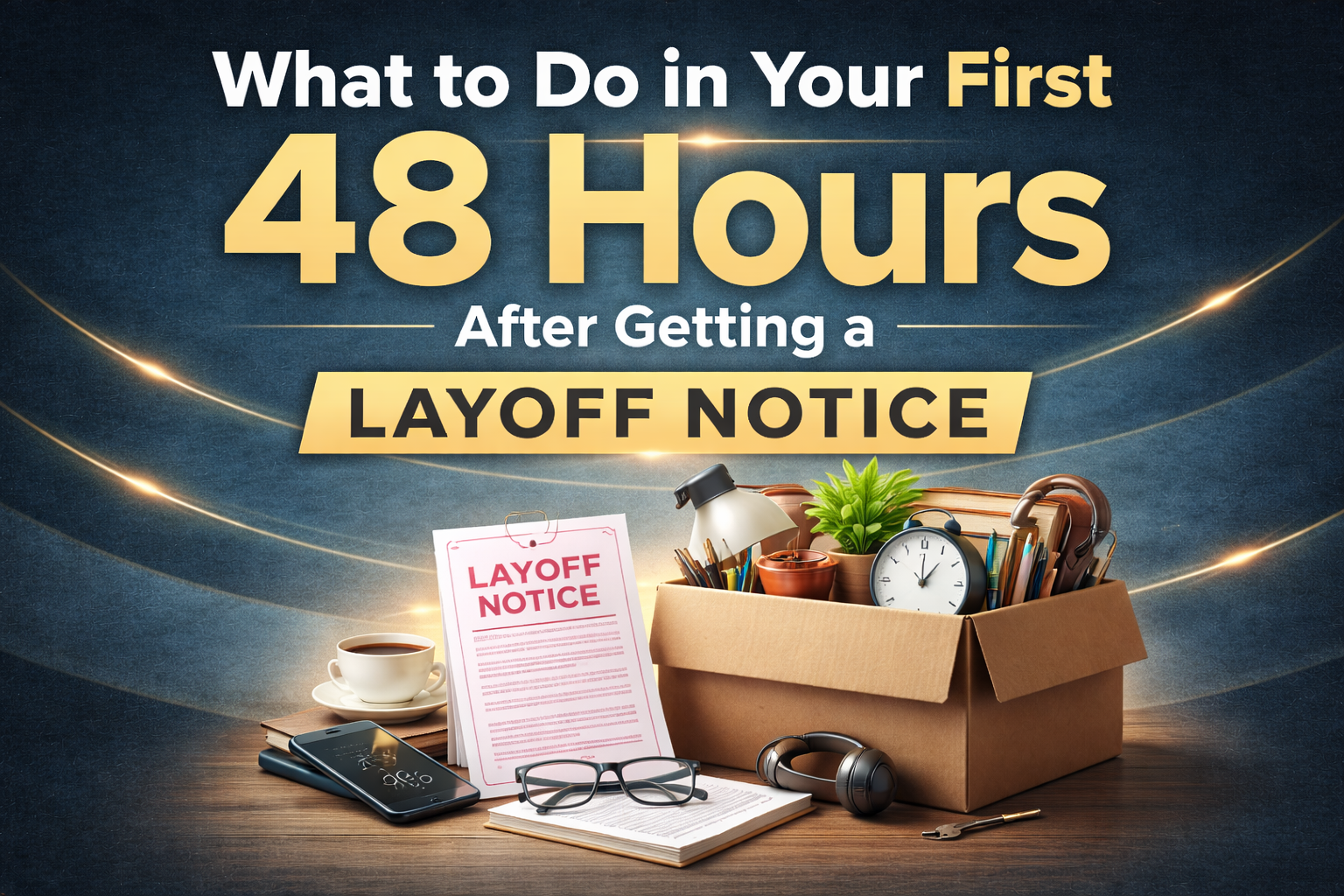
If you were just fired, harassed, retaliated against, or discriminated against at work: The next few hours and days matter more than you realize. Evidence disappears. Deadlines begin running. Choices you make now — including what you say to HR and whether you sign anything — can affect your legal rights significantly.
This guide tells you exactly what to do first.
Step 1: Do Not Sign Anything Today
If your employer handed you a severance agreement, a release of claims, or any document requiring your signature — stop. Do not sign it today.
California law gives employees time to review separation agreements. For employees over 40, the Older Workers Benefit Protection Act (OWBPA) requires that you be given at least 21 days to review any agreement waiving federal age discrimination claims, and 7 days to revoke after signing. Even if you're under 40, a severance agreement typically includes a release of all employment law claims — and you cannot un-sign it.
What to say if pressured:"I'd like to review this carefully and consult with an attorney before I sign. I understand I have time to do that." You do not owe your employer an immediate answer on your legal rights.
Step 2: Write Down What Happened — Now
Memory fades. Documentation wins cases. As soon as you are somewhere private, write down:
- The exact words that were said to you — who said them, the time, the location
- Who was present (names, titles)
- What documents were given to you and what you were asked to sign
- Whether any reason was given for the termination, demotion, or adverse action
- Any prior incidents or complaints that you believe are related
- Your reaction and any responses you gave
This contemporaneous record is evidence. Courts and juries give weight to notes written the same day something happened.
Step 3: Preserve Your Evidence Before Access Is Cut Off
If you were terminated, your employer will likely cut off your access to company systems quickly — sometimes immediately. Before that happens:
- Forward relevant emails to your personal email address — if the emails relate to your own employment (performance reviews, communications about the decision, documentation of complaints you made), forwarding them for your own record is typically permissible, but do not forward confidential business information, client data, or proprietary information. When in doubt, consult an attorney before forwarding.
- Take screenshots of relevant Slack messages, Teams conversations, or other communications from your personal device — again, only communications about your own employment situation
- Photograph any written notices handed to you
- Note the physical copies of documents you received
Important: Do not take or copy trade secrets, proprietary client information, confidential business data, or anything that clearly belongs to the company rather than relating to your own employment. Doing so could expose you to claims of misappropriation and undermine your own case. If you're unsure, make a note of what exists and ask an attorney before accessing it.
Step 4: Do Not Post on Social Media
Do not post about what happened on LinkedIn, Twitter/X, Facebook, or any other platform — even vaguely. Social media posts are discoverable evidence in litigation. What feels like venting can be used against you in a lawsuit. Talk to a trusted friend or family member privately instead.
Step 5: Start Tracking Your Damages
Employment law damages are based on actual economic loss. Start keeping records immediately:
- Your final pay stub and last paycheck
- Any accrued vacation that should be paid out (California requires this at termination)
- The value of benefits you are losing (health insurance, stock vesting, pending bonus)
- Your job search activity — applications, interviews, responses — which is relevant to your duty to mitigate damages
Step 6: File for Unemployment Insurance
File for California Unemployment Insurance immediately at the California Employment Development Department (EDD) website. You are likely entitled to benefits if you were laid off or terminated without serious misconduct. Filing promptly matters — there is a one-week unpaid waiting period, and delays in filing delay benefits. An attorney consultation does not affect your right to file for unemployment.
Step 7: Call an Employment Attorney — For Free
Most California employment attorneys offer free initial consultations. The consultation is confidential, creates no obligation, and costs you nothing. Use it to understand:
- Whether you have a viable legal claim
- What your severance agreement actually releases
- What deadlines apply to your situation
- Whether there are claims you can still bring even if you sign a release
Employment cases are time-sensitive. California statutes of limitations — often 3 years for FEHA discrimination claims, 1 year for certain Labor Code claims — begin running from the date of the adverse act. Consulting an attorney early preserves your options.
Common Mistakes That Hurt California Employment Claims
- Signing a severance agreement the same day it is offered without legal review
- Returning company property before documenting what you returned
- Speaking to HR without understanding that everything you say can be used against you
- Waiting weeks or months to consult an attorney, allowing evidence to disappear
- Posting about the situation on social media
- Assuming you don't have a case because you weren't a "protected class" — California protects many categories of workers and many forms of retaliation
Frequently Asked Questions
My employer said I was terminated "at will." Does that mean I have no rights?
No. At-will employment does not mean your employer can fire you for an illegal reason. Termination is still wrongful if it was motivated by discrimination, retaliation, or violation of public policy — regardless of at-will status. Most California employees can still pursue a claim even if they were "at-will."
I complained to HR about harassment before I was fired. Is that protected?
Yes. Reporting harassment or discrimination internally to HR is protected activity under California FEHA. If you were terminated after making that complaint, retaliation may be at issue — and the timing of your termination relative to your complaint is one of the most important facts in your case.
I was told it was a layoff, not a firing. Does that change my rights?
Not necessarily. A "layoff" can be pretextual — an employer may call a termination a layoff to avoid legal scrutiny, particularly when older or more protected workers are targeted. If you were "laid off" but younger or less senior employees in your department were retained, that pattern is worth examining.
Wrongfully Terminated or Treated Unfairly at Work?
Our employment attorneys represent workers throughout Silicon Valley. Get a confidential case evaluation at no cost.
Schedule a Free Consultation (408) 963-7533About the Authors
Claire Melehani, Esq.
Employment law attorney at McLellan Law Group with extensive experience representing employees in wrongful termination, discrimination, and retaliation matters throughout Silicon Valley.
Steven McLellan, Esq.
Founding attorney at McLellan Law Group, specializing in employment law and business litigation throughout Silicon Valley and Santa Clara County.
Legal Disclaimer: This article is for general informational purposes only and does not constitute legal advice or create an attorney-client relationship. Employment law is complex and fact-specific; outcomes vary depending on individual circumstances. Consult a licensed California employment attorney for advice specific to your situation. McLellan Law Group, LLP · 20665 4th Street, Ste. 202, Saratoga, CA 95070 · (408) 963-7533