Neighbor Construction Damage: CA Insurance Guide - McLellan Law
Real Estate | Published November 10, 2026 | McLellan Law Group, LLP
When Your Neighbor's Construction Damages Your Home: Insurance Coverage in California
A recent California appellate decision confirms that if every possible cause of your property damage falls within a policy exclusion, your homeowners insurance may not cover the loss.
Bottom Line: In Linsao v. [Insurer] , the California Court of Appeal held that a homeowner's insurance claim for property damage caused by a neighbor's construction project was properly denied because every possible cause of the loss fell within one or more policy exclusions. The court also held that when a claim is correctly denied, the insurer's handling of the investigation does not support a bad faith claim, even if the insurer gave mixed messages about coverage during the process.
What Happened in This Case
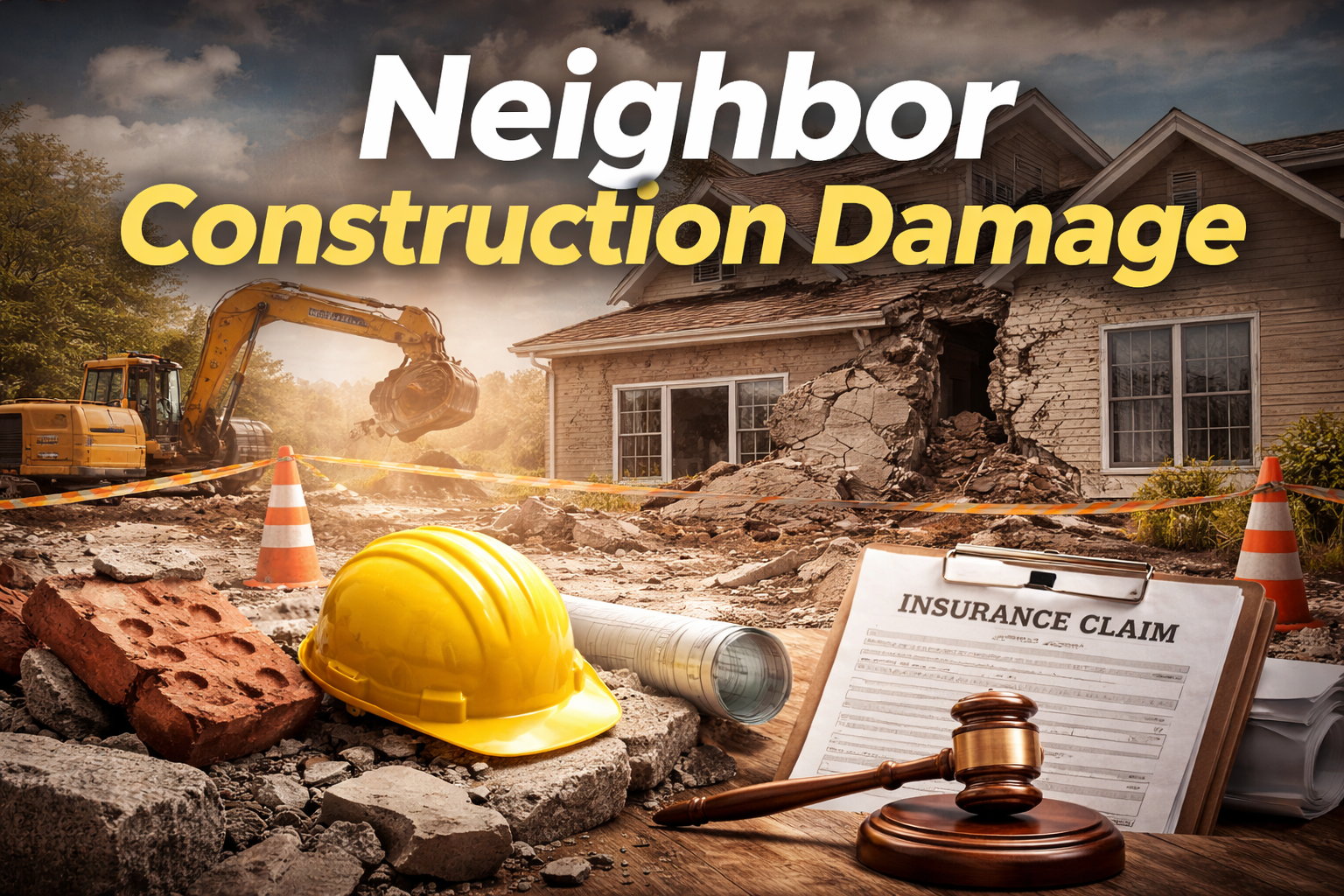
Two homeowners owned a house in Sherman Oaks at the bottom of a ravine. A contractor building a house on the lot uphill was required by the City of Los Angeles to build a retaining wall along the downslope edge. After a neighbor complained about the wall's appearance, the City asked the contractor to pause work on it. About 15 feet of the wall was left unfinished.
Before a December 2019 storm, the contractor placed sandbags at the unfinished end. During the storm, runoff flowed along the wall to its open end, cut a gully toward the homeowners' property, and broke their rear retaining wall. Water, mud, and debris entered the house and left it uninhabitable.
The homeowners' insurer initially denied the claim under the earth movement exclusion, then reopened the investigation, and then denied it again, citing a combination of excluded perils. During the reopened investigation, employees of the insurer reportedly told one of the homeowners that the loss was covered. The insurer disputed that.
What the Court Decided
The trial court granted summary judgment for the insurer, and the Court of Appeal affirmed. The key holdings:
- If every possible cause is excluded, the claim fails. Under an all-risk policy, the insurer bears the burden of proving a loss was caused by an excluded peril. But when every possible cause of the loss falls within an exclusion, the insurer wins on summary judgment. The court did not need to determine which cause predominated, because it did not matter: rain, earth movement, third-party construction, and government decisions were all excluded.
- "Inadequate construction" includes unfinished construction on neighboring property. The court gave the inadequate construction exclusion its plain meaning and held that an incomplete retaining wall on the uphill lot was "inadequate" construction, triggering the exclusion.
- A correct denial ends the bad faith inquiry. The homeowners argued that even if the claim was properly denied, the insurer acted in bad faith during the investigation by giving mixed messages about coverage. The court held that when the ultimate coverage decision is correct, the insurer's investigation conduct does not support a claim for breach of the implied covenant of good faith and fair dealing.
Key point: The court did not require the insurer to prove which single cause predominated. It was enough to show that every candidate cause was excluded under at least one policy exclusion.
Why This Matters for California Homeowners
Your homeowners policy has more exclusions than you might think
All-risk homeowners policies are broad, but they contain important exclusions. Common exclusions that can apply when a neighbor's construction damages your property include:
- Earth movement: mudslides, landslides, mudflow, and related events
- Weather: rain, wind, and flood (unless you carry separate flood coverage)
- Faulty or inadequate construction: construction defects on or off the premises, including incomplete work
- Acts or decisions of any person or government body: including a city's decision to pause construction work
When property damage involves multiple causes and all of them fall within exclusions, you may have no coverage at all under your standard policy.
Mixed messages from your insurer may not help you
It is frustrating to be told your claim might be covered, only to have it denied later. But under this decision, if the denial is ultimately correct, the insurer's mixed messages during the investigation do not give rise to a bad faith claim. The homeowners still lost even though they presented evidence that insurer employees told them the loss was covered.
Your recovery may depend on claims against third parties
When your homeowners policy does not cover the loss, your options for recovery shift to the people and entities responsible for the damage. In a case like this, that might include:
- The contractor who left the retaining wall unfinished
- The property owner who hired the contractor
- The City, if its decision to pause construction contributed to the damage (subject to Government Claims Act deadlines)
Practical Steps If Your Property Is Damaged by Neighboring Construction
- File the insurance claim promptly. Even if you suspect the claim may be denied, file it. Not filing preserves nothing and may waive rights under the policy.
- Document the damage immediately. Take photographs and video before any cleanup. Preserve any physical evidence of how the damage occurred.
- Identify every possible cause. Water, mud, construction defects, government decisions, and earth movement may all have contributed. Understanding the causes helps determine which policies, parties, and exclusions may apply.
- Review your coverage carefully. Check whether you have separate flood coverage, difference-in-conditions coverage, or endorsements that might apply. Many homeowners are underinsured for water-related damage.
- Pursue third-party claims promptly. If the contractor, property owner, or a government entity caused the damage, you may have claims against them. Government Claims Act deadlines (typically six months for personal property damage against a government entity) can be very short.
- Keep records of all communications with your insurer. While this decision limits bad faith claims when coverage is properly denied, documentation of what you were told and when can still be relevant if the coverage question turns out differently in your case.
Frequently Asked Questions
If my neighbor's construction damages my home, does my insurance cover it?
It depends on what caused the damage and what your policy excludes. If the damage was caused by faulty or inadequate construction, earth movement, or weather, those causes are typically excluded under standard homeowners policies. If some non-excluded cause independently produced the damage, coverage may be available. An attorney or insurance professional can review your specific policy.
What is the "efficient proximate cause" rule?
When a loss involves multiple causes, California courts look at the "efficient proximate cause," meaning the predominant cause that set the chain of events in motion. If the efficient proximate cause is a covered peril, the loss is covered even if excluded perils contributed. But if every possible cause is excluded, the efficient proximate cause analysis does not help the policyholder.
Can my insurer deny my claim if they told me it was covered?
Under this decision, yes. The court held that when the coverage denial is ultimately correct, the insurer's earlier statements about coverage do not create a bad faith claim. The homeowners argued estoppel, but the court found they had not given up any real alternative in reliance on the coverage statements. However, the court left open whether first-party estoppel might apply in a case with different facts.
Should I get flood insurance if I live downhill from construction?
A separate flood or mud intrusion policy can be valuable if your property is at risk from water, mud, or debris flows. Standard homeowners policies typically exclude these perils. The homeowners in this case had a separate flood and mud intrusion policy from another insurer, which was resolved separately.
How long do I have to file a claim against the City?
Under the Government Claims Act, you generally have six months from the date of the injury or damage to file a claim against a California government entity for personal property damage. This deadline is strict, and missing it can bar your claim. Consult with an attorney promptly if a government entity may have contributed to property damage.
Property Damaged by Neighboring Construction?
Our attorneys advise California homeowners on property damage claims, insurance disputes, and real estate litigation.
Schedule a ConsultationOr call us at (408) 963-7533
About the Authors
Claire Melehani, Esq.
Founding Partner
Founding partner at McLellan Law Group with experience advising property owners and tenants on real estate disputes and landlord-tenant matters throughout Silicon Valley.
Steven McLellan, Esq.
Founding Partner
Founding partner at McLellan Law Group, whose practice focuses on real estate litigation and civil disputes throughout Silicon Valley and Santa Clara County.
Legal Disclaimer: This article is for general informational purposes only and does not constitute legal advice or create an attorney-client relationship. Consult a licensed California attorney for advice specific to your situation. McLellan Law Group, LLP · 20665 4th Street, Ste. 202, Saratoga, CA 95070 · (408) 963-7533