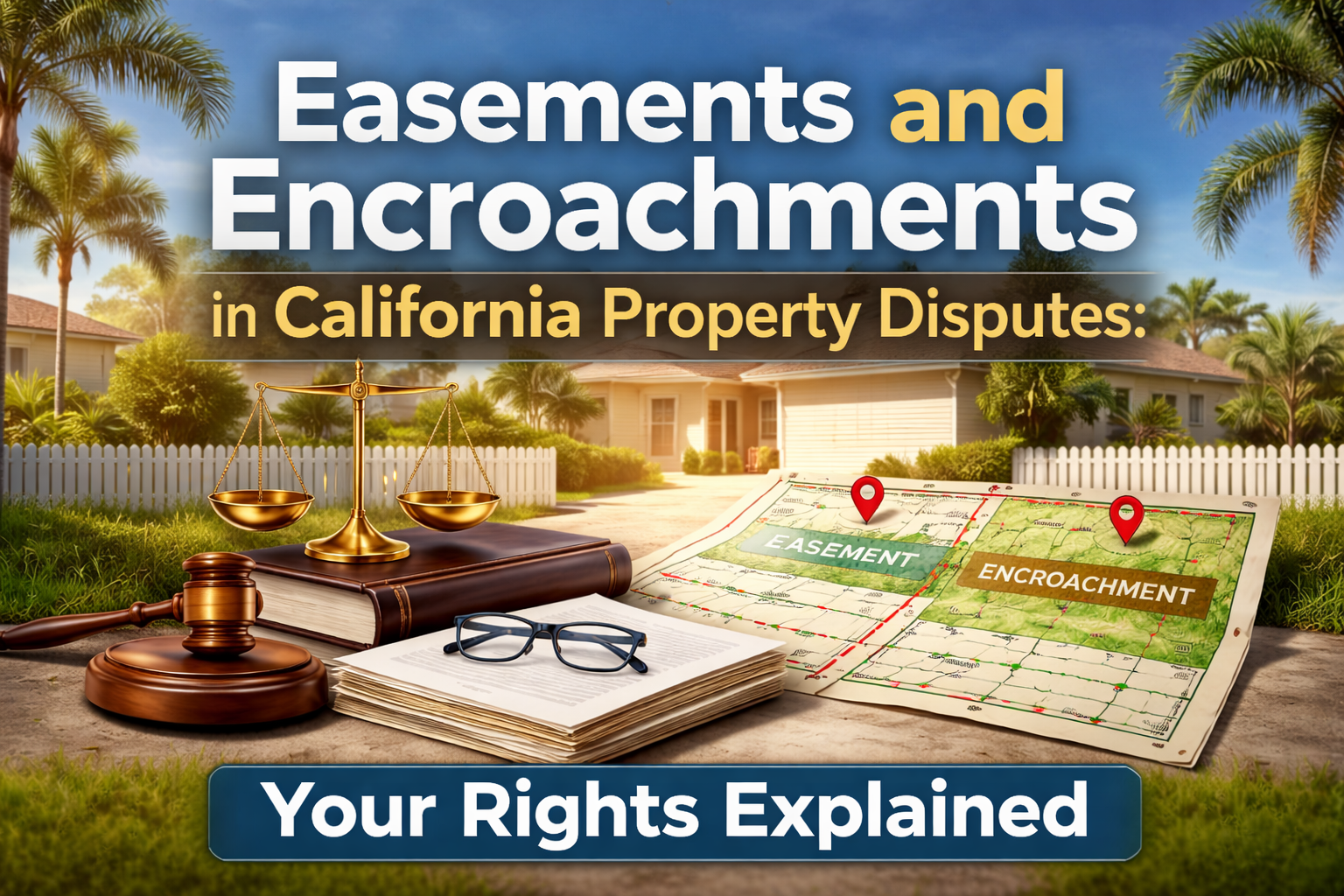
Easements and Encroachments in California Property Disputes: Your Rights Explained

Easements and Encroachments in California Property Disputes: Your Rights Explained
Steven McLellan & Claire Melehani

Real estate disputes aren’t always about ownership—often, they’re about use.
Easements and encroachments can quietly reduce property value, interfere with development, and spark expensive litigation.
What Is an Easement?
An easement grants someone else the right to use part of your property for a specific purpose, such as:
- Driveway access
- Utility lines
- Drainage
Some easements are recorded. Others arise through long-term use or necessity.
Encroachments: A Different Problem
An encroachment occurs when a structure or improvement—such as a fence, wall, or building—extends onto neighboring property without permission.
Encroachments can:
- Complicate sales and refinancing
- Trigger boundary disputes
- Lead to court-ordered removal in extreme cases
Why These Disputes Escalate
Property owners often discover issues only when:
- Selling or refinancing
- Renovating or developing
- Receiving a neighbor’s demand letter
At that point, emotions and financial stakes are already high.
Legal Remedies and Strategy
Resolution may involve:
- Quiet title actions
- Declaratory relief
- Negotiated boundary agreements
- Injunctions or damages
The best outcome depends on timing, documentation, and long-term property goals.
McLellan Law Group, LLP advises property owners with a focus on protecting value—not just winning arguments.